Publications
Peer-reviewed publications by Hari Prasad Piridi in machine learning, graph neural networks, recommender systems, and applied AI.
2025
-
 DVAE-GNN: A Dual Variational Autoencoder Graph Neural Network for Unsupervised Anomaly Detection in Static Attributed NetworksHari Prasad Piridi, Dipanjan Chakraborty, and Prajna Devi UpadhyayDiscover Data, 2025
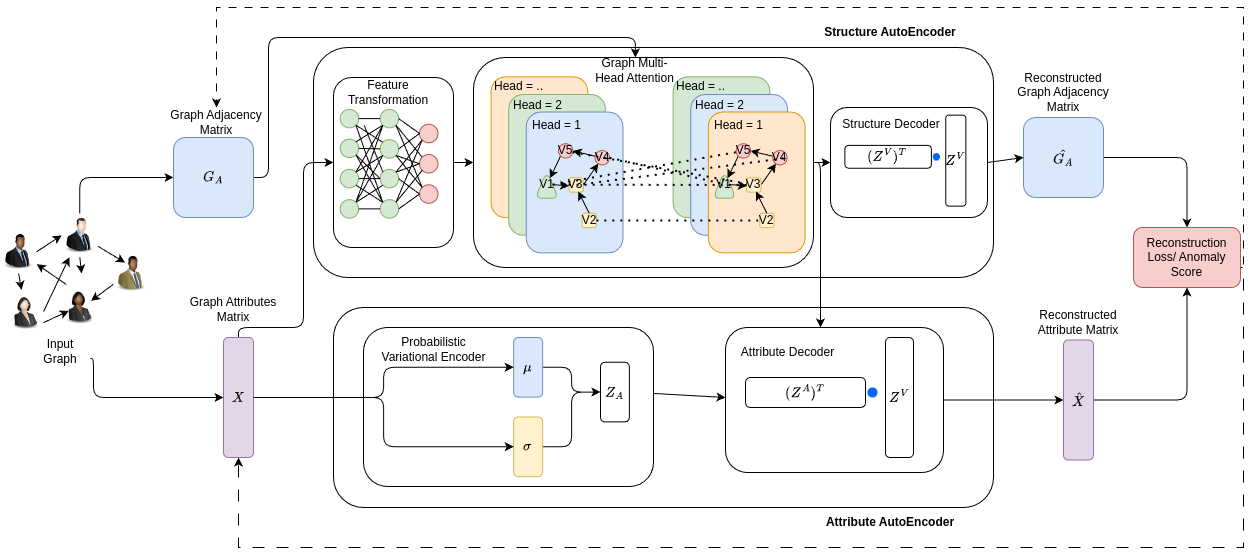
Unsupervised anomaly detection in static attributed networks is a crucial research area in network science, with applications spanning cybersecurity, social network analysis, and beyond. We introduce DVAE-GNN, a novel framework leveraging variational autoencoders and graph neural networks to effectively capture both attribute and structural information. The framework employs a structure autoencoder with a graph neural network to learn structural representations, while the attribute variational autoencoder models the probabilistic distributions of node attributes. We also incorporate a multi-head attention mechanism to prioritize and aggregate relevant information from a node’s neighbors. Extensive experiments on multiple real-world and synthetic datasets reveal that DVAE-GNN consistently achieves high average performance in ROC-AUC scores.
-
 A Causal Inference Framework for Personalized Badge Selection at WalmartSreejith Kallummil, Sunil Rudresh, Anuranjan Kumar, and 5 more authorsDiscover Data, 2025
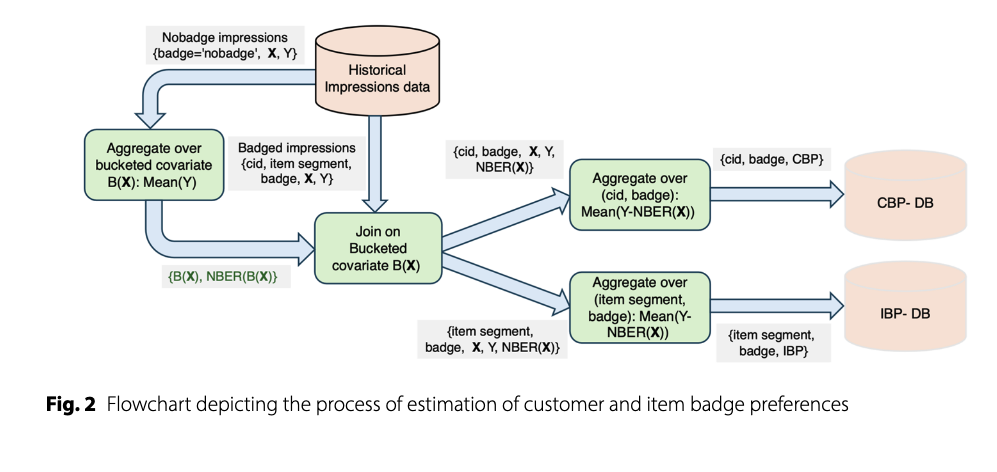
In E-Commerce platforms such as Walmart, product badges (Bestseller, Reduced Price, etc.) play a pivotal role in guiding customer choices and enhancing product discoverability. Most E-Commerce platforms face a multi-badge selection problem in the sense that an item is eligible for multiple badges but there exists real estate to display only one product badge per item tile on search/browse pages. Multi-badge selection requires us to identify the most impactful badge, for a given context, from a list of eligible badges. There exists limited literature on multi-badge selection and the potential impact of such solutions. In this paper, we propose a novel causal-inference based personalized multi-badge selection framework which estimates preferences for different badges among individual customers and item segments based on historical interactions in an offline mode. The customer-level and item-level badge preferences thus estimated are used in the front-end to identify the most relevant badge for a given item on a search/browse page in real time. This process of estimating badge preference offline and using only the relevant estimated badge preferences in real time greatly helps in achieving tight latency requirements at the front-end for E-Commerce platforms operating at a large scale. The proposed multi-badge selection framework is evaluated using on-line tests (A/B tests) in Walmart web and app platforms, resulting in statistically significant improvements in the number of add-to-carts (ATCs), units purchased, gross merchandise value (GMV), etc. corroborating the efficacy of the proposed framework deployed in a real-world scenario.
2024
-
 Session and Category Aware Recommendation with Graph Neural NetworksSanjay Krishnamurthy, Hari Prasad Piridi, Nargis Pervin, and 2 more authors2024SSRN Preprint
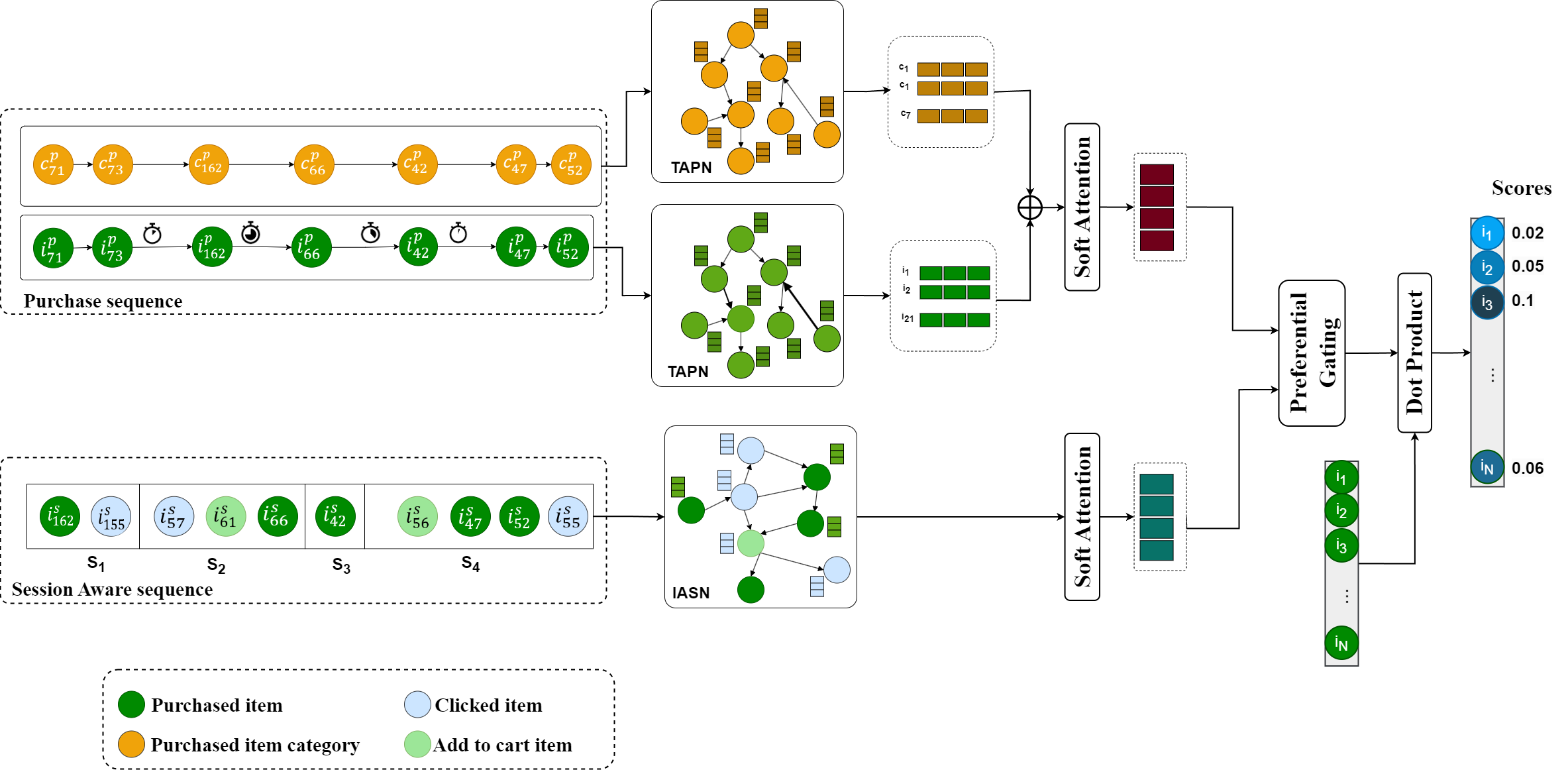
For e-commerce platforms like Walmart.com, recommendation systems are vital in enhancing user experience by accurately predicting and presenting products that align with customer preferences. Traditional Session Aware Recommenders (SAR) utilize historical interactions such as clicks, cart additions, and purchases to predict users’ upcoming interactions. However, a significant limitation of these systems is their inability to inherently predict the next item a user may wish to purchase. This predictive capability is essential for e-commerce platforms striving to maintain customer engagement, particularly through the use of periodic recommendation emails. Furthermore, while modeling purchasing preferences based on the historical session data can provide insights into user interests, it faces challenges due to the often limited variation in user intent across consecutive interactions. To address these challenges, we introduce the Session and Category Aware Sequential Recommender (SCAR), featuring a novel two-tower deep learning architecture designed to predict future purchases. The first tower, uses a Graph Neural Network (GNN) to process sequences of purchased items, including their categories and the time elapsed between purchases. This approach effectively differentiates the purchases from the session interactions, by capturing long-term purchase preferences and integrating broader category-based preferences. The second tower uses another GNN to analyze a fixed length of prior sessions and different types of user interactions, focusing on short-term behaviors. This is particularly significant, as our technique can better distinguish between interaction types, resulting in a better understanding of user preferences. The outputs of both towers are integrated using a gating network that allows the model to effectively weigh the long-term preferences against the short-term behaviors to predict the next item likely to be purchased. Comprehensive experiments with Walmart data show that SCAR consistently surpasses several recent benchmarks showing performance improvements of up to 20.74% in the Hit rate at top 10 (Hit@10) and 3.34% in Mean Reciprocal Rank (MRR@10). This highlights SCAR’s ability to effectively capture users’ sequential behaviors and temporal dynamics simultaneously, thereby enhancing the accuracy of predictions in e-commerce recommendation systems.
2023
-
 AI-based Market Intelligence Systems for Farmer Collectives: A Case Study from IndiaRonak Ladhar, Sourav Sharma, Srikant Tangirala, and 15 more authorsACM Journal on Computing and Sustainable Societies, 2023
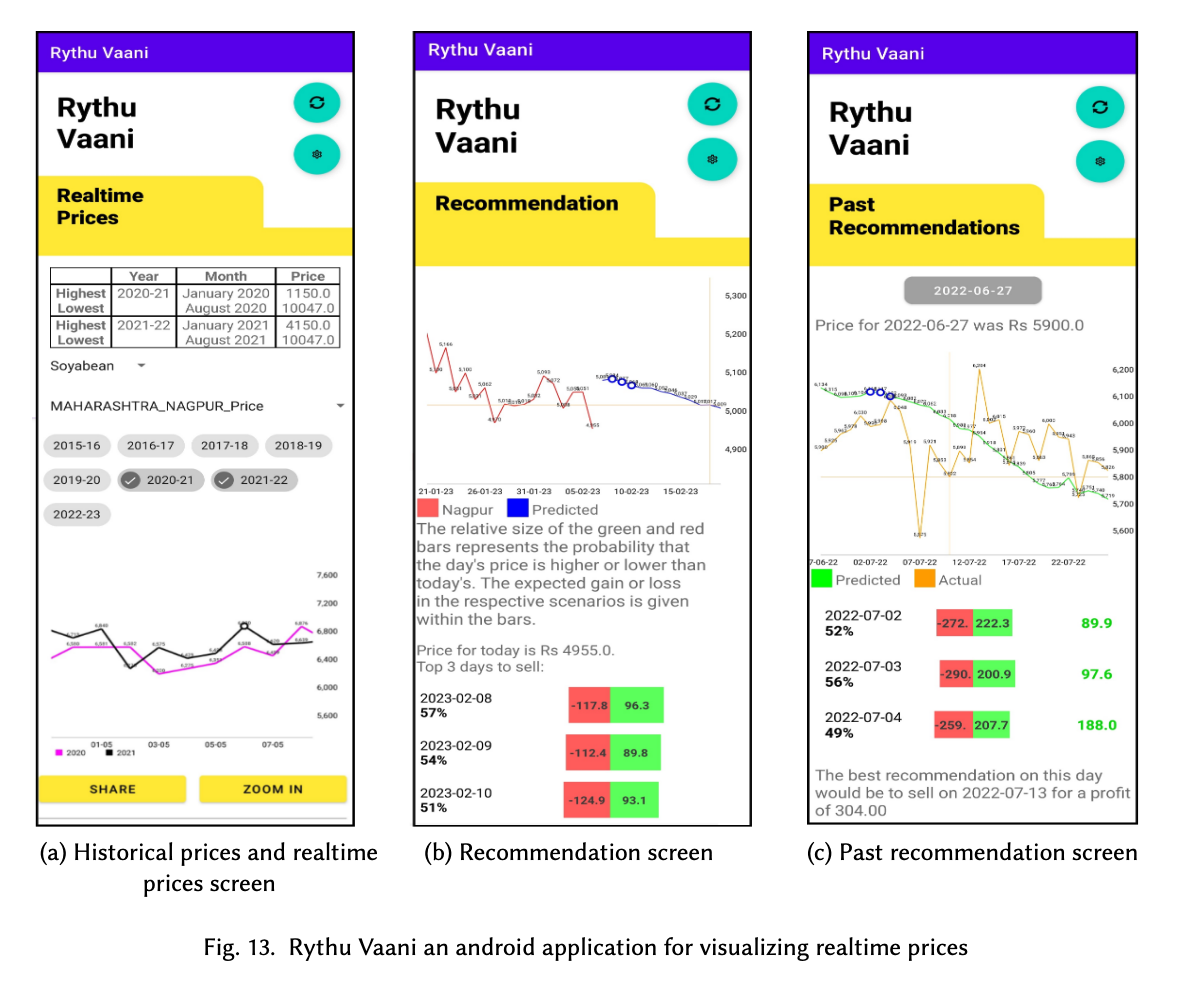
Small and marginal farmers are unable to get a good price for their produce, because they face several challenges in market participation. Aggregation of produce via farmer cooperatives and the ability to delay sales (for non-perishable crops) to when market prices are high has emerged as a useful strategy to improve farmer incomes. We work with a network of farmer cooperatives in India growing soyabean and explore the potential of developing a machine learning–based price forecasting and sales recommendation system that produces suggestions on the best dates when harvested soyabean crops should be sold, e.g., whether to sell right away (if prices are likely to fall in the future) or to wait (if prices are likely to rise). We present an evaluation of different methods for price forecasting and a prospect theory–based method to produce sales recommendations. Experiments on historical data indicate that we can provide modest gains to farmers, and we build and field test an Android application for this purpose. Early results indicate positive feedback. Our methods can be generalized to other agricultural commodities that can be stored for several months and help farmer cooperatives to compete effectively in agricultural markets.